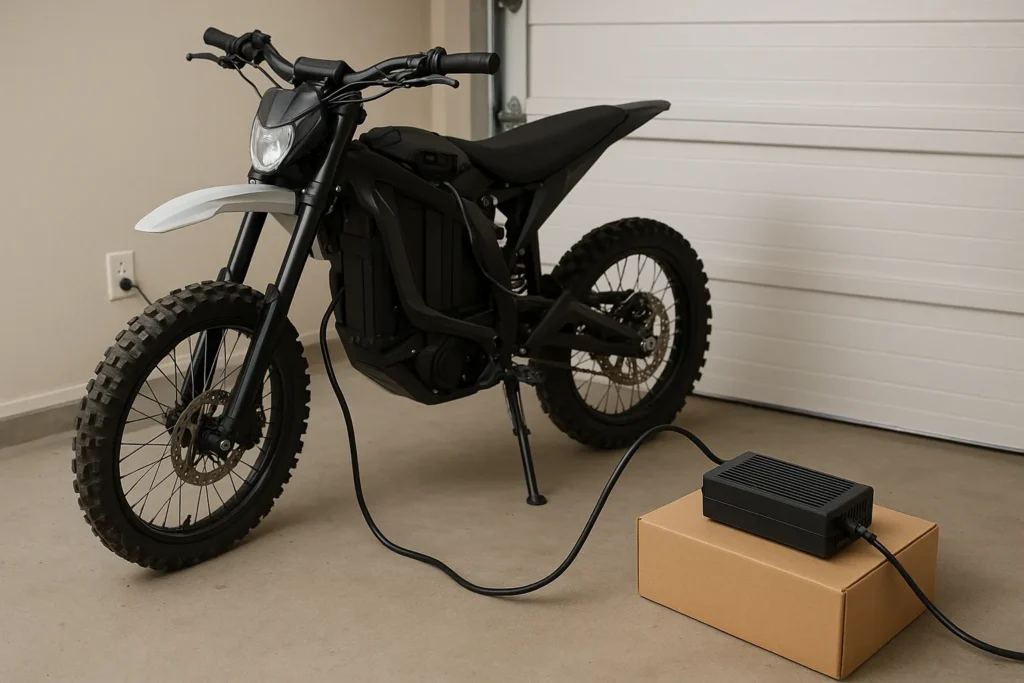
How to store electric dirt bike battery long term is the #1 concern for riders who plan to park their machines for weeks or even months. Whether you’re prepping for winter, taking a break from riding, or storing your kid’s dirt bike while school gets busy, knowing the right steps can make the difference between a strong battery and a dead pack. 🔋
The good news? Storing your battery doesn’t have to be complicated. By following simple but effective practices, you’ll extend its lifespan, keep performance high, and avoid expensive replacements. In this guide, we’ll share proven tips to help every rider—whether you’re a parent managing your child’s first bike or a seasoned trail enthusiast—learn how to store electric dirt bike battery long term without stress.
New to the world of e-dirt bikes? Before diving in, check out our complete breakdown of what an electric dirt bike really is and how it works. It’s a perfect starting point to understand motors, batteries, and why electric riding has exploded in popularity.
Finally, remember this: storing your battery the right way is about consistency, not complexity. Riders who learn early how to store electric dirt bike battery long term protect their investment and ensure their machines are ready to shred trails whenever the season calls. ⚡
Key Takeaways
- Store at a partial charge (about 40–60%) in a cool, dry place; check monthly.
- Avoid extremes: don’t store empty or full, don’t charge below freezing, don’t bake it in heat.
- Disconnect parasitic loads (controller, lights, trackers) to prevent self-discharge.
- Label the pack with its storage SoC and last check date—future you will thank you. 😉
- If you only remember one thing: cool temp + mid-charge = longest life.
⚡ Quick Navigation: Use the jump links below to jump straight to what you need most 👇
The 7-Minute Pre-Storage Routine (fast, foolproof)
Before you think about how to store electric dirt bike battery long term, start with a quick routine that sets the foundation for healthy storage. This checklist takes less than 10 minutes but saves months of frustration later. ⚡
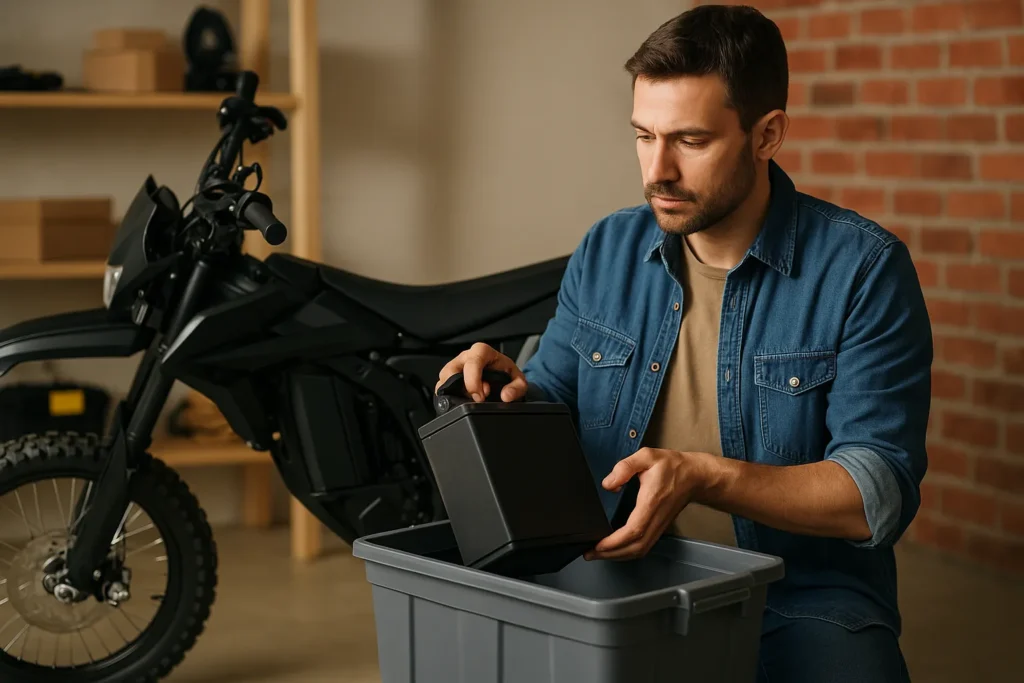
- Clean and dry the pack. Dirt, dust, and moisture left on the battery can lead to slow corrosion and poor terminal connections. Use a soft cloth and make sure it’s fully dry before storage.
- Check the charge level. Aim for a state of charge around 40–60%. This sweet spot reduces stress on the battery cells and prevents both deep discharge and overcharging issues.
- Remove from the bike if possible. Parasitic loads like controllers, lights, or GPS trackers can drain energy over time. Taking the battery out avoids unnecessary self-discharge.
- Label the pack. Write down the date and charge level before placing it in storage. Future you will be grateful for this small habit. 😉
- Choose the right spot. A cool, dry location like a climate-controlled garage or basement shelf is ideal. Avoid heat sources, direct sunlight, or damp corners where humidity builds up.
By completing this short process, you set your battery up for long-term stability and keep performance intact when riding season starts again. 🔋
Ideal SoC & Temperature: the science in plain English
When planning how to store electric dirt bike battery long term, two factors make the biggest impact: the state of charge and the temperature of the storage location.
The ideal state of charge sits between 40–60%. Leaving your pack at 100% for weeks increases electrode stress, while draining it near zero risks deep-discharge and permanent cell damage. That mid-range zone helps slow chemical aging and keeps the battery stable.
Temperature is just as critical. Store your battery in a cool, consistent environment—around 50–68°F (10–20°C). Heat accelerates degradation, and extreme cold makes charging unsafe. Think of it like leaving milk in the fridge versus on the counter: the cooler spot keeps it fresher longer. ❄️🔥
If your space tends to get warm, try moving the battery deeper inside, away from direct sunlight or heat sources. For riders in colder climates, never charge the pack until it has warmed to room temperature. These habits prevent lithium plating and protect the pack for future rides.
For a deeper dive into storage strategies and safety tips, check out this complete eBike battery storage guide. It reinforces the same principles and adds extra insights on protecting lithium-ion cells.
By mastering both charge level and climate, you’re actively extending battery life and ensuring your dirt bike is ready to fire up the trails when the season returns. ⚡
5 Proven Rules for Long-Term Storage
Riders often overcomplicate battery care, but the basics come down to a handful of golden rules. Following them consistently will make sure your pack lasts longer, performs better, and avoids costly replacements. These rules are built on real-world testing and supported by battery science.
- Avoid extremes. Never store a battery fully charged or fully drained. Both ends of the spectrum put heavy stress on the cells. A mid-level charge keeps things balanced.
- Keep it cool and stable. High temperatures accelerate chemical aging, while fluctuating conditions can create condensation. Aim for a dry, climate-controlled space like a garage shelf or basement corner.
- Disconnect parasitic loads. Components like controllers, alarms, or GPS units constantly sip power. Over months, this can drain the pack completely. Unplugging ensures energy stays where it belongs.
- Check regularly. Once every 30 to 60 days, measure the charge. If it drops below 40%, bring it back up to mid-level. This small habit prevents deep discharge.
- Never charge in freezing conditions. Cold lithium-ion cells are vulnerable to plating and irreversible damage. Always let the battery warm up to room temperature before plugging in.
Remember: the key to success is consistency, not perfection. Riders who understand these principles know exactly how to store electric dirt bike battery long term, protecting both safety and performance for future rides. ⚡
Heat, Cold, and Moisture: what actually hurts your pack
Environmental factors are often underestimated when it comes to battery care. Heat is the silent killer, speeding up chemical reactions and wearing down the cells faster than most riders realize. Leaving your pack in a hot shed or car trunk during summer can shorten its lifespan dramatically.
Cold is less destructive during storage, but it creates a major risk if you try to charge the pack while it’s still frozen. Always wait until the battery warms up to room temperature before connecting it to the charger. This simple step prevents lithium plating and long-term capacity loss. ❄️
Moisture is another threat. Humid spaces encourage corrosion on connectors and even the battery management system. A dry, clean room is always the best choice. If you don’t have a perfect spot, breathable storage bags or cases can help reduce condensation.
Riders who want a deeper background on how these packs are designed should revisit our guide on what an electric dirt bike really is. Understanding the components helps explain why elements like heat, cold, and humidity matter so much in daily and seasonal care.
All these conditions tie back to one thing: controlling the environment around your pack is just as important as managing charge levels. By paying attention to climate, you master the essentials of how to store electric dirt bike battery long term and avoid early replacements. ⚡
BMS, Self-Discharge & “Vampire” Loads
One of the most overlooked parts of battery storage is the constant drain caused by the Battery Management System (BMS) and other small electronics. Even when the bike is off, the BMS continues to monitor voltage and temperature, pulling a tiny but steady current from the cells.
Add-ons like GPS trackers, alarms, or display units make this drain worse. Over time, these “vampire” loads can slowly eat away at the stored energy and push the pack into deep discharge.
The best defense is simple: remove the battery from the bike or fully disconnect the leads when storing for more than a couple of weeks. This minimizes self-discharge and gives the pack a better chance of holding its mid-level charge. 🔋
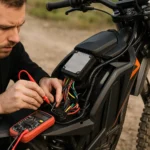
It’s also smart to set calendar reminders to check the pack monthly. A quick voltage check ensures everything stays in range, and if needed, you can top it back up to around 50%. With this routine, you maintain control and prevent the slow, hidden damage that sneaks up on so many riders.
By paying attention to these background drains, you’re actively protecting performance and extending the life of your pack. That’s the real secret behind mastering how to store electric dirt bike battery long term without headaches later. ⚡
Chargers & Profiles: set it and forget it (safely)
When it comes to storage, the charger you use and the way you manage it can make or break battery health. Many modern chargers include a storage mode that automatically stops at around 50–60% capacity, which is perfect for long-term care. If yours has this option, take advantage of it—it eliminates guesswork.
For chargers without a dedicated setting, monitor the charge manually and disconnect once the pack hits mid-level. Leaving a lithium-ion battery plugged in at 100% for weeks is one of the fastest ways to reduce its overall lifespan.
Another smart practice is using a simple timer. Plugging your charger into a one-time timer ensures the battery isn’t accidentally left charging for too long. It’s a low-cost hack that prevents overcharging and reduces stress on the cells.
Smart chargers can add convenience, but they aren’t magic. Always double-check the settings and make sure you’re not floating the pack at full voltage. Consistency and moderation are what keep the chemistry balanced.
Riders who apply these habits quickly realize that safe charging habits are just as critical as climate and storage conditions. Done right, these practices ensure you always know exactly how to store electric dirt bike battery long term while keeping your pack in peak condition. ⚡
Real-World Scenarios (parents & young riders)
Every rider’s situation is a little different, which is why storage tips should fit into real life. A parent putting away a dirt bike for their kid’s winter break faces different challenges than a college student who only rides on weekends. Still, the fundamentals remain the same.
For winter storage, most packs will only need two quick top-ups over several months. As long as the charge stays near 50% and the battery is in a cool, dry place, performance will remain strong when spring rolls around. ❄️
If you’re taking a break due to an injury, treat the downtime as an extended pause. Charge the battery to mid-level, label the date, and set reminders to check every 45 days. It’s a small routine that prevents deep discharge.
Students often deal with cramped dorms and limited space. In these cases, even a simple closet works better than a hot outdoor shed. The key is controlling temperature swings and avoiding moisture.
Each of these scenarios proves that riders who understand how to store electric dirt bike battery long term can adapt the same rules to fit their lifestyle, no matter where or how they ride. ⚡
Safety First (no drama, just good habits)
Safety should always be part of your storage checklist, even if accidents are rare. Lithium-ion batteries are powerful, and taking a few precautions ensures peace of mind while your bike rests.
First, store the pack away from flammable materials like gas cans, oily rags, or cardboard piles. Give the battery some breathing room so heat can dissipate naturally. 🔥
Second, make it a habit to inspect the battery before charging after storage. Look for swelling, odd smells, or visible damage. These are warning signs that something isn’t right, and plugging it in could be dangerous.
Third, avoid stacking heavy objects on top of the battery. Pressure can stress the casing or connectors, leading to small cracks that let in moisture.
Following these steps doesn’t just protect the equipment—it protects your home and family too. Riders who know how to store electric dirt bike battery long term understand that safety isn’t paranoia, it’s just part of being a responsible owner. ⚡
FAQs (real queries riders search)
What percentage should I store my battery at long term?
Aim for about 40–60%. This range reduces stress on the cells and keeps the pack stable for months. Storing it at 100% or close to zero shortens the lifespan.
Can I leave the battery installed on the bike?
It’s not the best idea. Even when switched off, small systems like controllers or trackers pull tiny amounts of power. Over time, this can drain the pack.
How often should I check the charge during storage?
Every 30 to 60 days. If the level falls under 40%, bring it back up to about half capacity to prevent deep discharge.
Is it safe to store fully charged just in case?
No. High charge levels combined with time and warm environments accelerate battery degradation. Mid-charge is always better.
Can cold weather damage the battery?
Cold is fine for storage, but don’t try charging a frozen pack. Wait until it warms to room temperature before plugging in. ❄️
By staying on top of these common concerns, riders learn not just theory but practical habits that protect performance. Each answer reinforces the principles behind how to store electric dirt bike battery long term, making sure the pack is ready when riding season comes back. ⚡
The Ultimate End-of-Season Checklist
When the season ends, having a simple checklist helps riders avoid mistakes and keep their batteries healthy until the next ride. This step-by-step approach works for both beginners and experienced riders who want reliable performance year after year.
- Clean and inspect – Wipe the pack with a dry cloth, making sure there’s no dirt, grease, or moisture. Look for cracks or swelling before putting it away.
- Charge to mid-level – Set the state of charge around 40–60%. This is the sweet spot for slowing chemical aging.
- Remove from the bike – Disconnect it to stop parasitic drain from electronics.
- Label it – Write down the date, charge level, and when the next check should be. Future checks become effortless.
- Pick the right spot – Choose a cool, dry location away from direct sunlight, heat sources, or damp areas.
- Set reminders – Add a calendar alert for 30 to 45 days later to recheck the pack and adjust if needed.
By treating this list as a habit, you ensure that every battery goes into storage under the best possible conditions. Riders who stick to this method quickly see fewer replacements and more consistent power. That’s the real advantage of mastering how to store electric dirt bike battery long term and protecting your investment for the trails ahead. ⚡
Wrapping It Up: keep your pack ready for the trails
Storing a battery isn’t rocket science, but it does take consistency. By controlling charge levels, managing temperature, and checking in regularly, you’re giving your pack the longest possible life. These steps also mean fewer surprises when riding season starts back up.
Many riders underestimate how much small details—like avoiding parasitic drains or labeling charge dates—can influence performance. Over time, these habits save money and keep rides smooth.
If you’re just getting into the world of e-dirt bikes and want to understand the bigger picture, our guide on what an electric dirt bike really is helps connect the dots between the bike, the battery, and the components that power it.
By following these proven habits, you’re not just learning how to store electric dirt bike battery long term; you’re protecting your machine, your wallet, and the thrill of hitting the trails with full power. ⚡
Share Your Experience with the Community
Riding electric dirt bikes isn’t just about speed and trails—it’s also about community and learning from one another. Every rider has a different setup, a unique storage space, and their own tricks for keeping gear in top shape.
Now that you know the essentials of how to store electric dirt bike battery long term, it’s time to share your perspective. Did you discover a clever way to maintain the perfect charge? Maybe you have a go-to spot in your house that keeps the pack at the right temperature year-round?
Drop your tips, questions, or success stories in the comments and keep the conversation going. Riders helping riders is what makes this community thrive. And if this guide helped you, share it with friends or parents who are just getting into the world of e-dirt bikes—it could save them from costly mistakes and keep their bikes ready to ride. ⚡

Tyler Brooks is the storyteller behind most of the content at Electric Dirt Zone. With over 10 years of experience in digital media and a lifelong love for off-road riding, he blends technical insight from the team with engaging, down-to-earth writing. When he’s not turning dusty trail rides into blog posts, you’ll probably find him snapping pics before things get too wild.